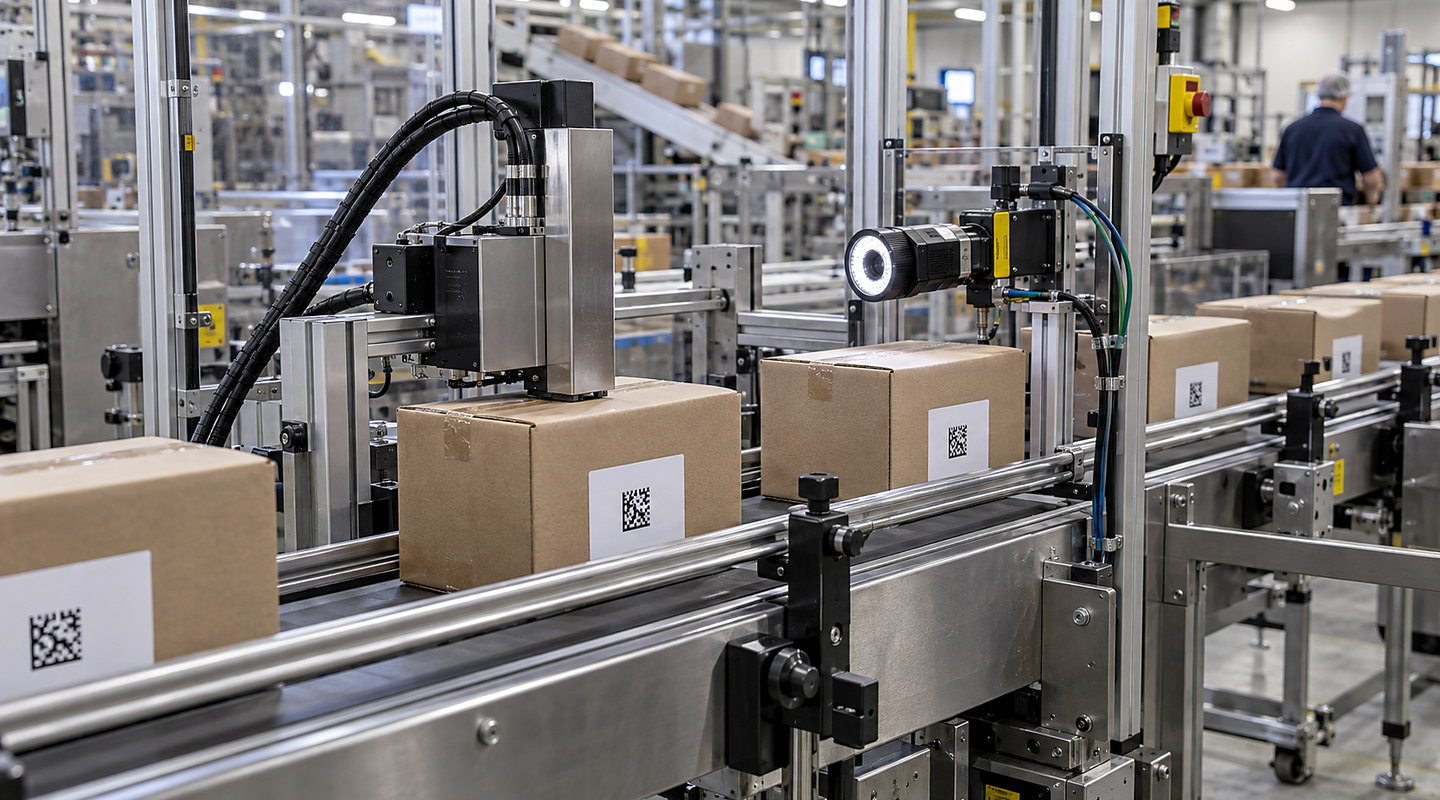
Egg Coding Machines: How the Process Works
Plan egg-coding trials around representative shells, approved messages, print position, handling, empty positions, stops and controlled job changes.
An egg coding process must associate the approved message with the correct released production job and place a usable mark on the actual eggs. Trial the normal shell and presentation range, print position and handling effects, including empty positions and stops. Check message correctness separately from print legibility, then agree the handling of unclear or missed codes.
Prepare the egg and job-data specification and message and identifier rules. The responsible food-business team must confirm applicable marking requirements and intended consumable use; a printer choice does not establish those approvals.
Understand the complete route from input to accepted output — Egg Coding Machines
Follow representative eggs from presentation at the coding point to inspection and release. Record the active production job and approved message, the shell range, spacing and intended marking area. Include first output after idle, a job transition with eggs between stations and the route for missed or uncertain codes. Keep the detailed trial sequence below with the application record.
Discuss your application

Keep the egg, its code and the released packing job together
An egg coding process needs a defined marking position, controlled message and practical check of the finished result. Trial actual eggs and the proposed handling arrangement, including empty positions and stops, before approving the operating sequence.
Define the mark with the responsible packing team
Use the exact approved content, character layout and coding location for the proposed market and product. Keep the source of the batch or producer information and its change authority documented. Equipment selection does not decide legal marking content; have the responsible food-business team confirm that requirement separately.
Assess egg presentation at the coding point
Record the range of egg sizes, shell appearance and orientation presented by the actual handling equipment. Include gaps and uneven spacing. Check whether the mark remains inside the intended area without assuming that every egg arrives in an identical position. Observe the handling result as well as the printed appearance.
Test the complete print combination
Trial the proposed printer, ink and settings on representative shells under the intended conditions. Ask the supplier for suitability documentation for the intended use, and record drying, legibility and handling observations. Do not approve a combination merely because its first dry sample looks clear.
Resolve empty positions and job transitions
Define how the system responds when an egg is missing, a line stops or a job changes with eggs still between stations. Include the first output after idle and any approved cleaning or startup procedure. The check must establish that the correct code is attached to the correct released production.
A worked planning example
As an illustrative test, place a known empty position between two identifiable eggs while running an approved sample message. Check the detector, print timing and recorded outcome, then repeat after a planned stop. The purpose is to expose an association or timing error; it is not a production-rate claim.
Acceptance questions to resolve
- Who approves the message content and the intended printer/ink use?
- Does the trial cover ordinary shell and presentation variation?
- How are unclear codes identified and handled before release?
- Can the operator change jobs and restart without ambiguous output?
For the next step, discuss this application using the examples and unresolved decisions above.
Keep connected responsibilities clear
Your final egg coding machines scope must also account for exception, rework and duplicate handling, verification, retention and reconciliation evidence, current regulations and the conditions at your site.
- Mark, label, tag and reader performance depends on the real substrate and environment.
- A readable code does not prove that its encoded data is correct or reconciled.
- Retention, privacy and regulatory rules must be defined by the responsible organisation.